If you’ve ever gone shopping for a handwoven Persian rug, you’ve probably heard carpet sellers emphasize the term “Raj”. While the colors, patterns, and origin of a rug are important, Raj count—the measure of knot density—is one of the most crucial indicators of a rug’s value, quality, and finesse.
But what exactly is Raj, and how does it influence the price and prestige of a Persian carpet?
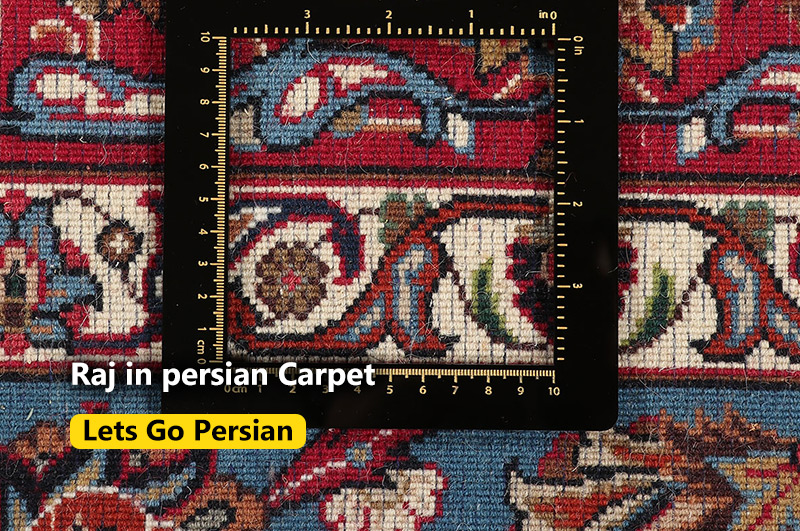
What Is “Raj” in Persian Carpets?
In traditional Persian carpet weaving, Raj is a time-honored unit used to measure the knot density of a rug. Specifically, it refers to the number of knots within 7 centimeters of the carpet’s width (in the Tabriz system). The origin of this measurement is linked to the ancient unit of “zar” (ذَرع), which is approximately 112 cm.
Since 1 Raj = 1/16th of a zar, this comes to 7 cm. So, to calculate the Raj count, we count the number of knots in every 7 cm. The higher the Raj number, the more knots, and therefore, the finer and more valuable the rug.
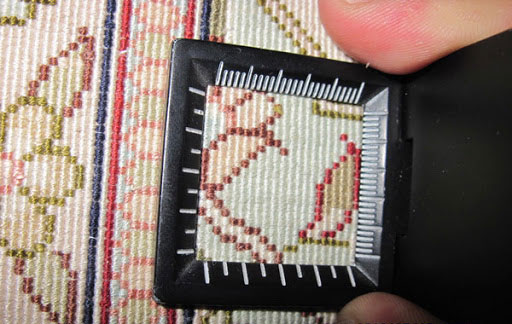
How to Measure the Raj of a Rug
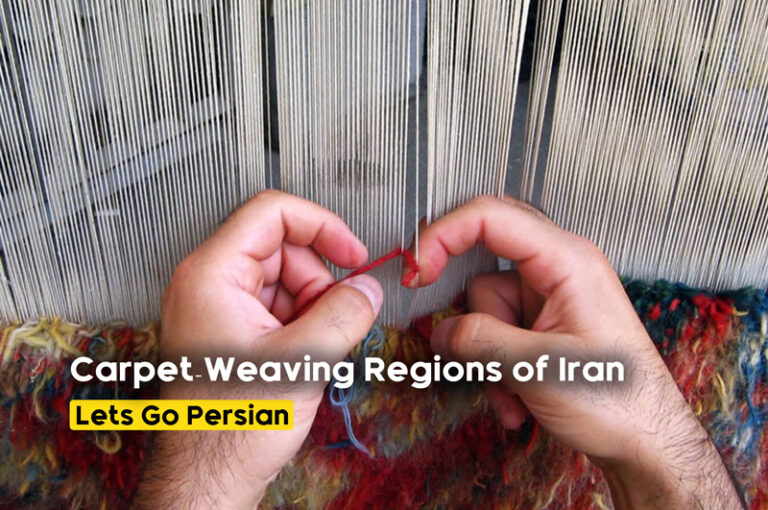
Measuring the Raj count is simple. Flip the carpet over, place a ruler across 7 centimeters of the width (preferably near the center), and count the number of knots along that line.
This knot count reveals how fine or coarse the weave is:
A higher Raj means finer detail, more labor, and usually a higher price.
A lower Raj indicates a coarser weave, which may still be beautiful, but generally less expensive.
For consistency, always measure along the width, since Persian rugs are woven horizontally. Uniformity in Raj count across the rug also signals higher craftsmanship.
What Influences Fineness or Coarseness?
Several factors affect whether a rug is fine (rizbaft) or coarse (doshtebaft):
Type of warp: Finer warps made from thin, closely spaced threads allow for more detailed work.
Type of yarn: Thin weft yarns (like silk or kork wool) enable tighter knotting.
Weaver skill and available time: Finer rugs take significantly longer to weave and require higher expertise.
Local tradition: Different regions of Iran have varying standards for what is considered “fine.”
Since finer rugs contain more knots, weavers are usually paid based on the total number of knots tied, not just size. That’s why high-Raj carpets are more expensive and time-consuming to produce, but also more durable and detailed.
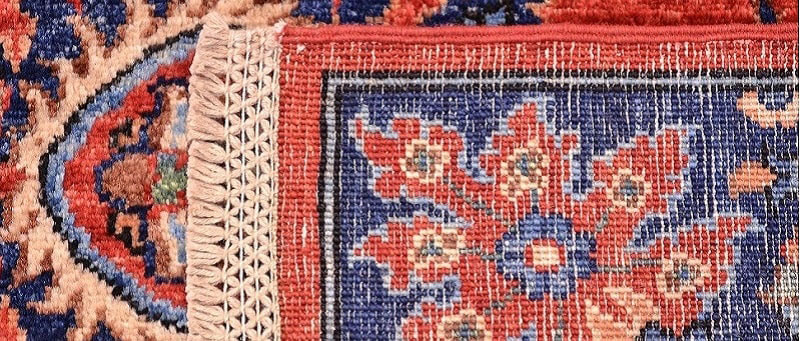
Alternative Knot-Density Measurements
While Raj is commonly used in Tabriz, other cities use different terms:
In Nain, the term “La” is used to indicate yarn thickness. For example, a 9-La carpet is coarser than a 6-La one.
In Isfahan, knots are sometimes counted per 6.5 cm instead of 7.
Outside of Iran, density is usually expressed as:
Knots per square meter (KPSM)
Knots per square foot
Each method essentially aims to measure the same thing—how many knots are packed into a given space—but with slightly different tools and units.
Final Thoughts
“Raj” may seem like just a technical term, but it speaks volumes about a carpet’s quality, detail, price, and labor intensity. The higher the Raj, the finer the rug. While coarser weaves can still be beautiful and durable, finer ones reflect master craftsmanship and investment.
Which type of weave do you prefer—fine or coarse?
We’d love to hear your thoughts or experiences in the comments below.