Afshar carpets are among the most renowned tribal rugs in Iran, with a significant domestic and international demand. To delve deeper, let’s explore the various tribes in Kerman province, particularly the Afshar tribe, and the distinctive design and weaving features of Afshar carpets.
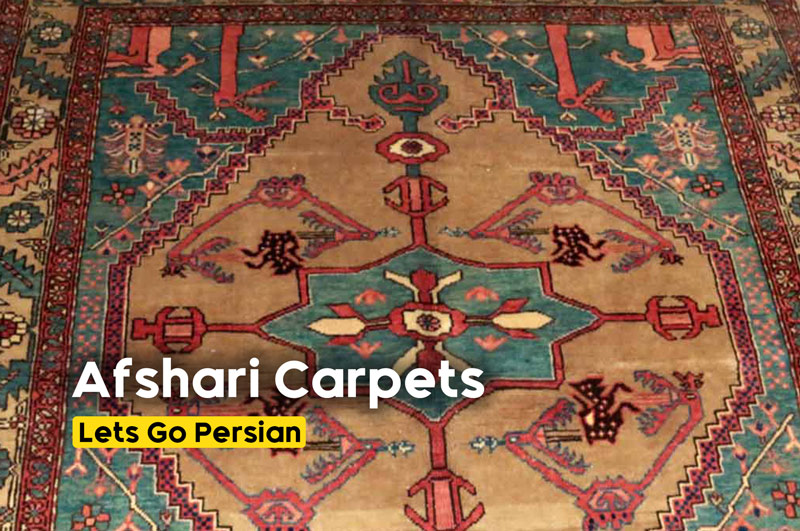
The major tribes in Kerman province include the Afshar, Pichaqchi, Jabalbarezi, Mehni, Lurs, and Arabs.
The significance and fame of Afshar carpets in Kerman are notable and highly recognized both within and outside the country. Moreover, most tribal rugs woven in Kerman are introduced to the market under Afshar. A brief history of the Afshar tribe reveals that they migrated to the land of Kerman during the reign of Shah Tahmasb Safavi. The people of this tribe reside in a vast region extending from southwest Rafsanjan to southeast along the Kerman-Bam road, with the city of Baft serving as their central hub for trade and commerce.
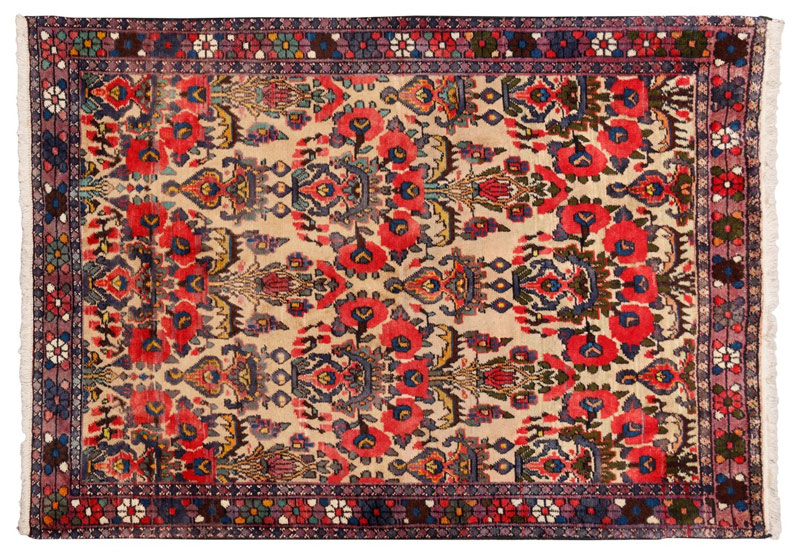
Major Weaving Centers for Afshar Carpets Cities such as Babak, Sirjan, Baft, Rabar, and western areas of Jiroft are the primary weaving centers for the famous Afshar carpets. The remaining nomadic Afshar tribes, living in the plains between Sirjan and Baft, contribute to another portion of the tribal carpet production in Kerman, marketed under the name Afshar and offered in the Sirjan market.
Physical Characteristics of Afshar Carpets In terms of design patterns, Afshar weavers utilize 11 distinct practices due to their high production frequency. In the Sirjan market, which serves as the central hub for the sale of tribal carpets in Kerman, these patterns are recognized by names such as Gol Hashmat, Abri, Do Gol Parisi, Se Kaleh, Minbari, Mousa Khani, Jangali, School or Bandi, Morghi, and Tasviri.

A reduction in color diversity is one of the prominent features of the colors used in tribal carpets in Kerman. However, this characteristic has contributed to their fame, especially in older rugs with more profound and mature colors. Applying lacquer, brown, cream, black, and indigo colors in various shades is a distinctive feature of Afshar carpets.
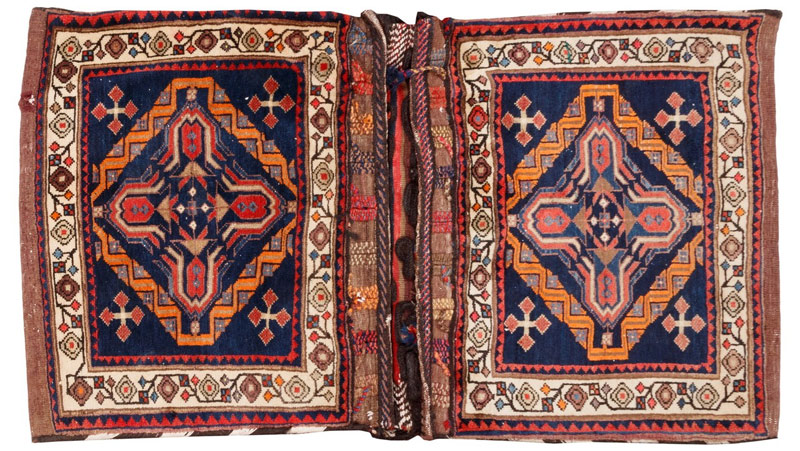
Wool is the primary material used for the pile of these carpets, with cotton serving as the material for warp and weft. The dimensions of Afshar carpets are generally not highly diverse and are commonly found in three sizes: Poshti (small), Zar’ (medium), and Zar’ and Nim (large). In recent years, larger dimensions, such as 2×3 square meters, have become popular, particularly in the villages around Sirjan.
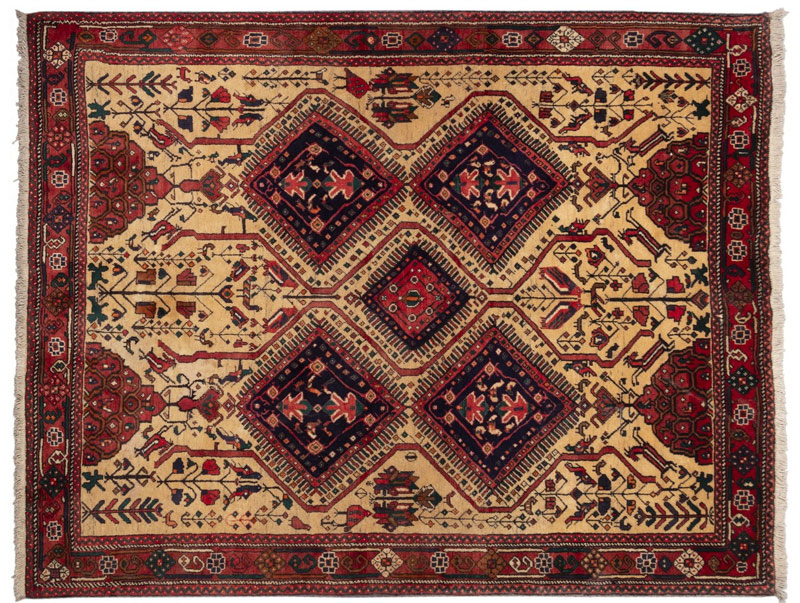
Technical Features of Afshar Weavings
- The knot count in authentic Afshar carpets varies between 15 to 25 knots per square inch.
- Afshar weavers exclusively use the Turkish knot. In contrast to other Afshar tribes who use the Persian knot, especially in the carpets woven in the villages around Sirjan, some of the rugs known as Afshar have Persian knots.
- All tribal carpets in Kerman, including Afshar, incorporate Shirazi (a weaving tool) during the weaving process.
- The finishing of carpets is done during the weaving process among all Kerman tribes.
- Using ground wefts is one of the most essential features of tribal carpets in Kerman.
- The twining technique is usually done on the ground and is in the Turkish style.
- Tribal carpets in this province were previously single-wefted, but now they are woven with thin and thick double wefts. The use of red weft is another characteristic feature of authentic Afshar carpets.
- Kilim weaving in Afshar is generally done in the Persian style using thick wefts.