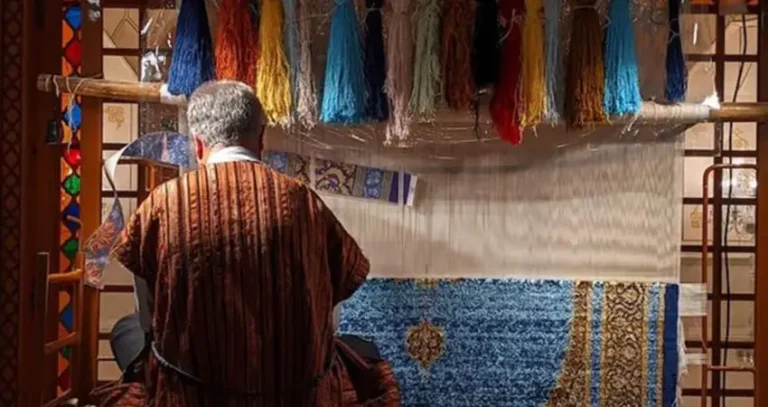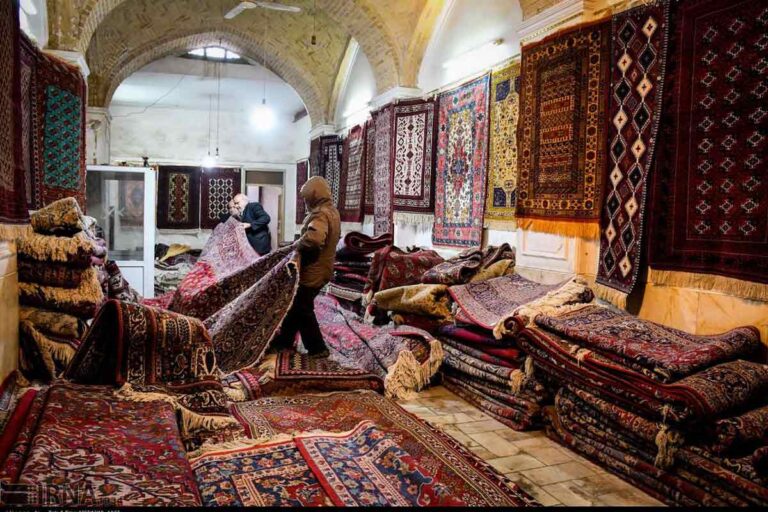

For those interested in museums and history and those involved in or fascinated by the world of carpets, gaining knowledge about the Iranian Carpet Museum can be highly beneficial. Situated in Tehran, this museum is considered one of the country’s critical cultural institutions due to its rich collections.
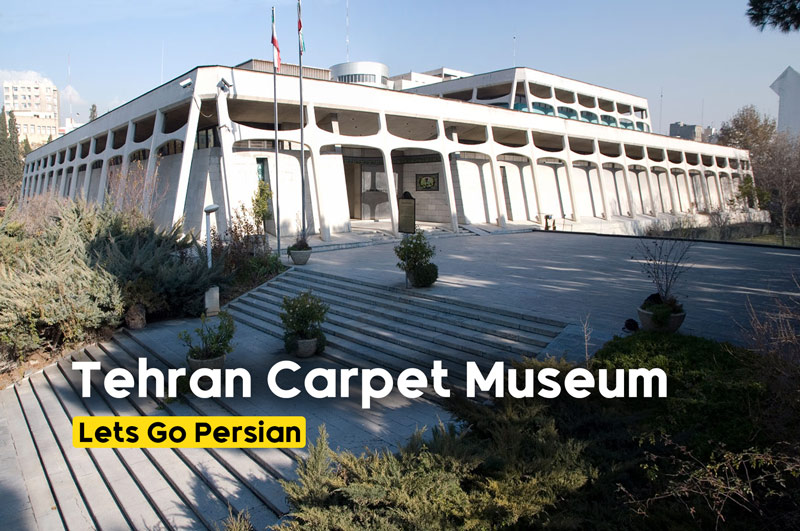
Iranian Carpet Museum:
The Iranian Carpet Museum is significant in Iran, attracting tourists and locals annually. This museum houses a vast collection of valuable Persian carpets and kilims. Enthusiasts can explore various patterns and styles of rugs and kilims, while the museum also features a library to enhance visitors’ awareness of Iranian carpet art.

History of the Iranian Carpet Museum:
Established by the order of Farah Pahlavi in Tehran, the Iranian Carpet Museum was inaugurated on February 11, 1978. Designed by the renowned Iranian architect Abdul-Aziz Farmanfarmaian, the museum is located in the northern part of Laleh Park, Tehran, covering an area of twelve thousand square meters. Construction began in 1961 to create a carpet gallery but remained incomplete for fifteen years. Subsequently, repairs commenced in 1977, and after a year and a half, in January 1978, the building was completed and inaugurated.
The museum’s purpose was to provide a space for research and study the history and artistic quality of Iranian carpet and rug weaving. It houses valuable and exquisite Iranian carpets created by renowned artists. Alongside carpets, the museum also preserves other precious works, including kilims.
Architectural Design of the Iranian Carpet Museum:
Designed by Abdul-Aziz Farmanfarmaian, the architectural beauty of the Iranian Carpet Museum captivates visitors. Farmanfarmaian, one of Iran’s most famous architects, brought artistic and Iranian authenticity to the museum’s structure. The exterior and interior of the building exhibit a harmonious integration, making it a masterpiece of Iranian art.
Museum Structure:
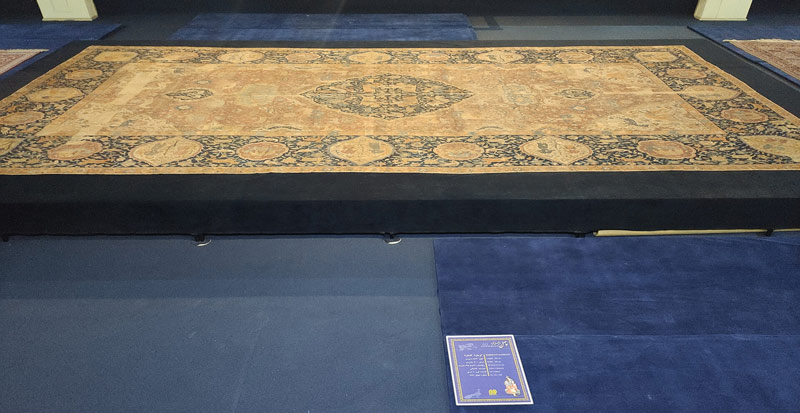
The museum building spans an area of 3,400 square meters and consists of two halls. These halls serve different purposes; the first-floor hall is typically used for temporary and seasonal exhibitions, while the ground-floor hall is dedicated to a permanent collection. Approximately 150 carpets and rugs, considered architectural masterpieces from key carpet-weaving centers in Iran, such as Tabriz, Isfahan, Kashan, and Kerman, are showcased.
Preservation Standards in the Iranian Carpet Museum:
The Iranian Carpet Museum carefully maintains around 150 types of carpets and rugs, emphasizing their historical significance and quality. Preservation considerations include the carpets’ age, rarity, and unique features, such as the colors used, pattern types, weaving techniques, and designs.
Library of the Iranian Carpet Museum:
One of the essential facilities in the Iranian Carpet Museum, available to the public, is its library. The library holds around 3,500 books in various languages, including Persian, Arabic, English, German, and French. Visitors can find valuable information about Iranian carpet art and the broader oriental carpet industry in these books. Additionally, the museum features a section where related books about carpets are available for purchase.
Kuchak Khan Jangali Rug:
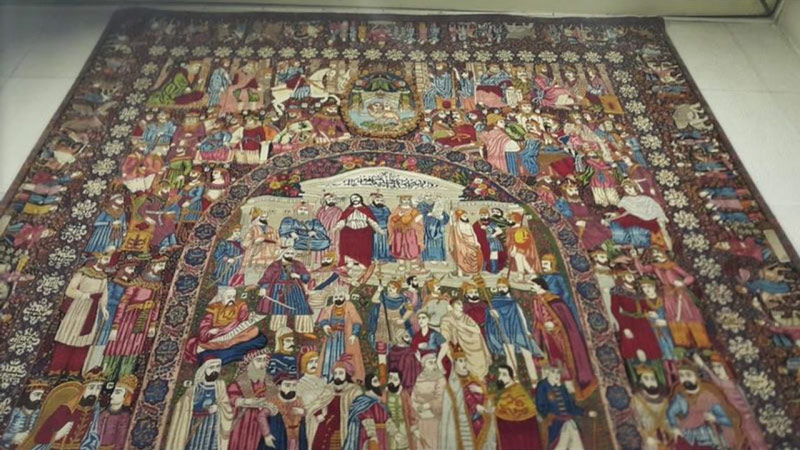
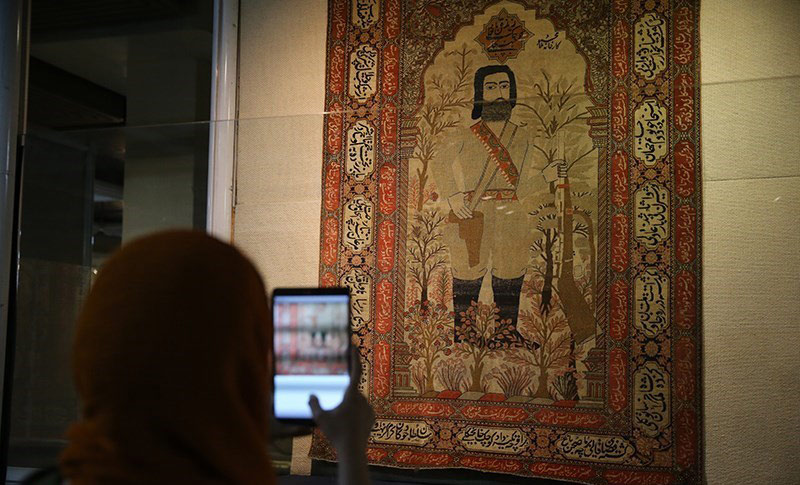
Among the museum’s valuable works, one standout piece is the Khan Jungle Rug. This exquisite rug depicts Mirza Kuchak Khan, a famous freedom fighter during the Qajar era, wearing military attire and holding weapons. Woven by Kashani carpet weavers, the rug measures 130 cm in width and 220 cm in length. While the exact weaving date is unknown, the Mulla Mahmoud inscription suggests it may belong to the late Qajar period.
Iranian Carpet Museum, Venue for Various Exhibitions
In addition to being a valuable museum, the Iranian Carpet Museum is also considered an exhibition space. As mentioned earlier, its first floor hosts temporary and seasonal exhibitions. Over the years, the museum has hosted numerous shows, and periodic arrays continue.
One of the notable exhibitions held at the Iranian Carpet Museum was the ‘Tarah-e-Boteh’ exhibition in 1985, which received significant acclaim. This museum has also organized another collection titled ‘Handwoven Armenian Carpets in Iran.’ In celebration of the Fajr Decade on February 12, 1986, another exhibition was held featuring prayer rugs with Mihrab designs dating back to the 14th and 18th centuries. The show also showcased carpets adorned with prominent flowers from the 13th century.
Features of the Iranian Carpet Museum
The Iranian Carpet Museum stands out as a unique institution in our country, gaining global recognition for its distinctive features. Beyond being a place to admire ancient carpets, it is a suitable research resource. Many researchers in the carpet industry studies find valuable materials for their research by visiting this museum.
This museum houses many valuable artifacts, primarily displayed on the ground floor. Tabrizi’s exemplary tapestries and colorful carpets from this renowned city are among the fascinating sections of the museum. Additionally, you can explore pictorial rugs illustrating scenes from the Shahnameh, the epic Persian poem that delves into Iranian history, literature, culture, and religion.
The museum’s collection includes exquisite and vibrant Tabrizi pictorial rugs, along with the famous carpets of the city. Notably, you can find rugs featuring scenes from the renowned ‘Shahnameh,’ offering a glimpse into Iranian epics, literature, culture, and religion.
The Iranian Carpet Museum’s unique features and rich collection make it an essential destination for those interested in exploring the history and artistry of Persian carpets. The museum remains a cultural gem in Iran with its diverse exhibitions and carefully preserved artifacts.