Buying a handwoven Persian carpet can be both exciting and overwhelming. With the vast variety of patterns, colors, materials, and price points, many buyers often find themselves confused when trying to make the right choice. To make matters more complex, cheaper options on the market can cast doubt on whether to invest in a handmade rug at all.
But don’t let the variety discourage you. The key is knowing what to look for. Below are six essential factors you should consider before making your purchase:
1. Pattern and Size Symmetry
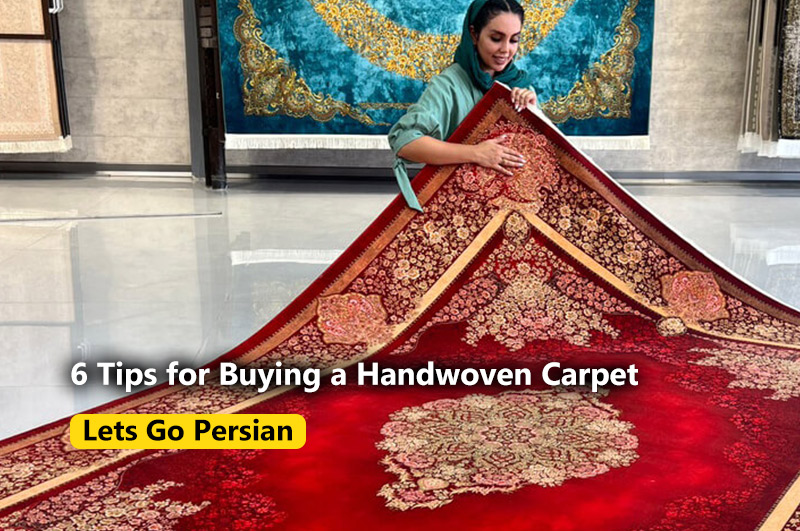
One of the first things to check is the symmetry of the rug. A well-made handwoven carpet usually features symmetrical patterns and structure. You can fold the rug in half to examine how the design aligns along the central axis.
Also use a measuring tape to compare distances from the center medallion to the top and bottom borders—if the difference is less than 3 cm, the rug is considered well-proportioned. Similarly, check for balance in color distribution and mirrored shapes on both sides of the design.
2. Color Consistency and Colorfastness
Due to the pile direction, colors may appear darker or lighter depending on the viewing angle. To evaluate color consistency, examine the rug against the pile and look for any irregularities, such as patches of uneven dye (known as “abrash”).
Inspect the base of the pile to ensure it matches the surface color. Any sharp contrast may indicate the use of low-quality dyes. You can also test the colorfastness by gently rubbing a damp white cloth on the surface—any color transfer may be a red flag.
3. Pile Quality and Texture
Don’t judge a rug’s quality by softness alone. Softer pile often means shorter durability and more dust absorption. Thicker pile generally wears better over time and is easier to clean.
More importantly, check for uniformity in pile height. Run your hand across the rug—if the surface feels smooth and even, it’s a sign of good workmanship. Avoid rugs with wave-like irregularities or patchy pile heights.
4. Inspecting the Back of the Rug
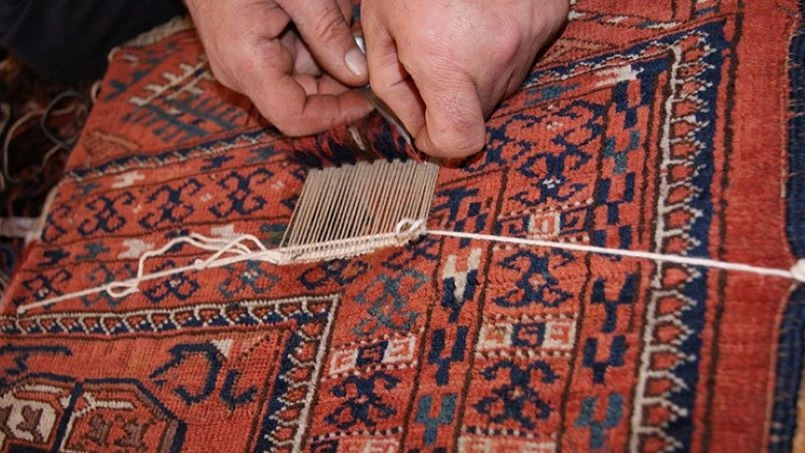
Turn the rug over and examine the back—this is where the true quality is revealed. Check for:
Tight, even knots
Pattern clarity from the reverse side
High knot density, which you can measure by counting the number of knots in a 10×10 cm area and multiplying.
Also, note the visibility of weft threads: the less visible they are, the tighter and stronger the rug is.

5. Check for Repairs or Damage
Look closely at the back of the rug for signs of repair. Repaired areas often appear firmer or have slightly different weaving tension. Gently fold the rug—if you hear a faint cracking sound, it could indicate fiber brittleness or dry rot.
You can also test the strength of the warp (foundation threads) by tugging gently on one strand. If it breaks easily, the rug may be deteriorating internally.
6. Match the Rug to Your Interior Design
While aesthetics are important, functionality matters too. Consider your home’s traffic flow and furniture placement:
Avoid placing antique, silk, or light-colored rugs in high-traffic areas like living rooms, dining rooms, or children’s rooms.
Reserve these pieces for low-traffic zones such as bedrooms or formal sitting areas.
Also ensure the rug isn’t too large—avoid placing expensive rugs under heavy furniture like beds or wardrobes, as it may lead to distortion over time.
Final Thought
Buying a handwoven carpet is both a personal and practical decision. It’s an investment in culture, craftsmanship, and beauty—but one that requires informed choices.
Have your own tips or experiences? Share them with us in the comments below—we’d love to hear what you’ve learned while shopping for Persian carpets.