


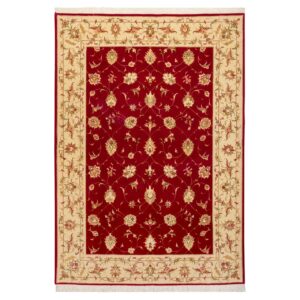
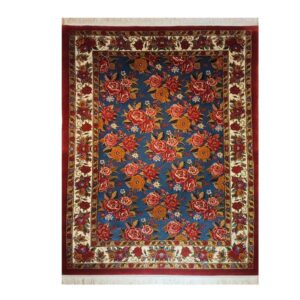
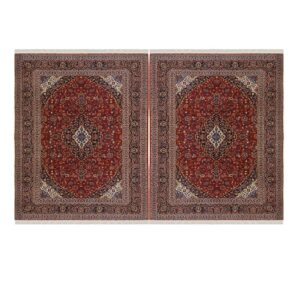
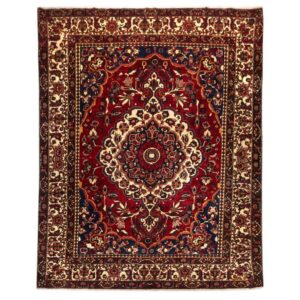
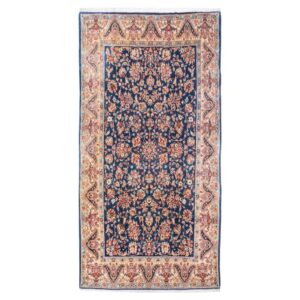
Persian Carpets in France: Authentic Rugs from Iran
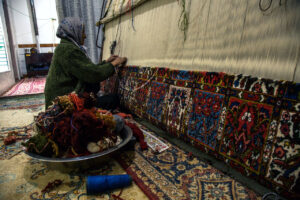
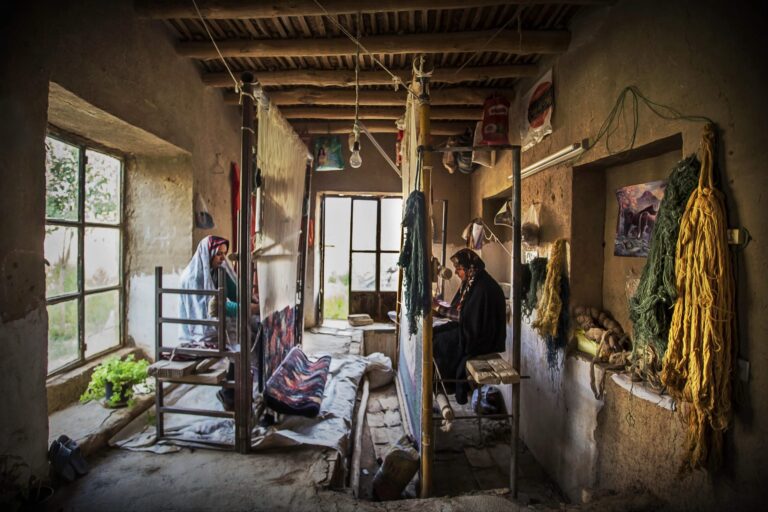
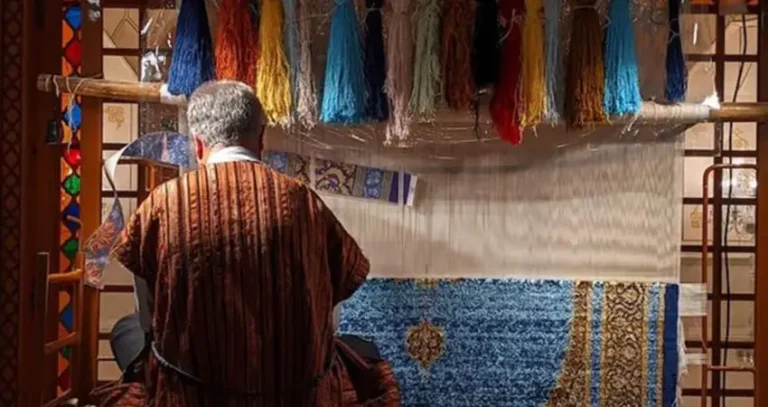
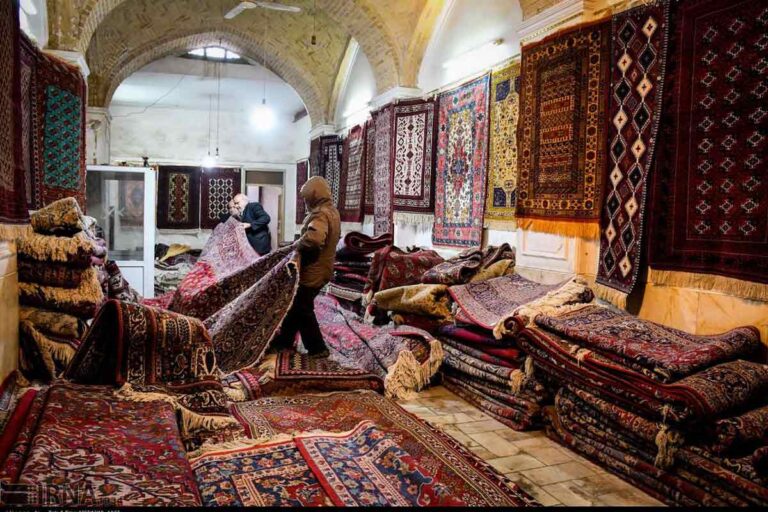
Persian carpets have a natural place in French interiors, where traditional craftsmanship, decorative arts, antiques, and contemporary design often come together. For French buyers, a handmade Persian carpet can be more than a floor covering: it can add warmth, texture, color, and a distinctive artistic element to an interior.
Persian carpets have attracted European collectors for generations. Their combination of craftsmanship, regional identity, natural materials, and artistic design makes exceptional examples particularly interesting to people who appreciate antiques, textiles, and decorative art.
Whether you are furnishing a Paris apartment, a traditional French home, a contemporary interior, or looking for an antique or collectible piece, the important considerations remain the same: size, design, material, weaving region, condition, craftsmanship, and intended use.

Why Persian Carpets Appeal to French Buyers
French interiors often combine old and new rather than following a single decorative style. Contemporary furniture may sit alongside antique furniture, artwork, traditional textiles, and carefully selected decorative objects. Persian carpets fit naturally into this approach because their designs can provide either a subtle foundation or a strong visual focal point.
- Craftsmanship: Traditional hand-knotting gives each carpet its own character.
- Natural materials: Wool, cotton, and silk are widely used in Persian weaving.
- Artistic character: Regional patterns range from delicate floral compositions to bold geometric designs.
- Versatility: Persian carpets can work with both classical and contemporary furniture.
- Longevity: A well-made handmade carpet can remain part of an interior for many years.

Persian Carpets and French Interior Design
For Classical and Elegant Interiors
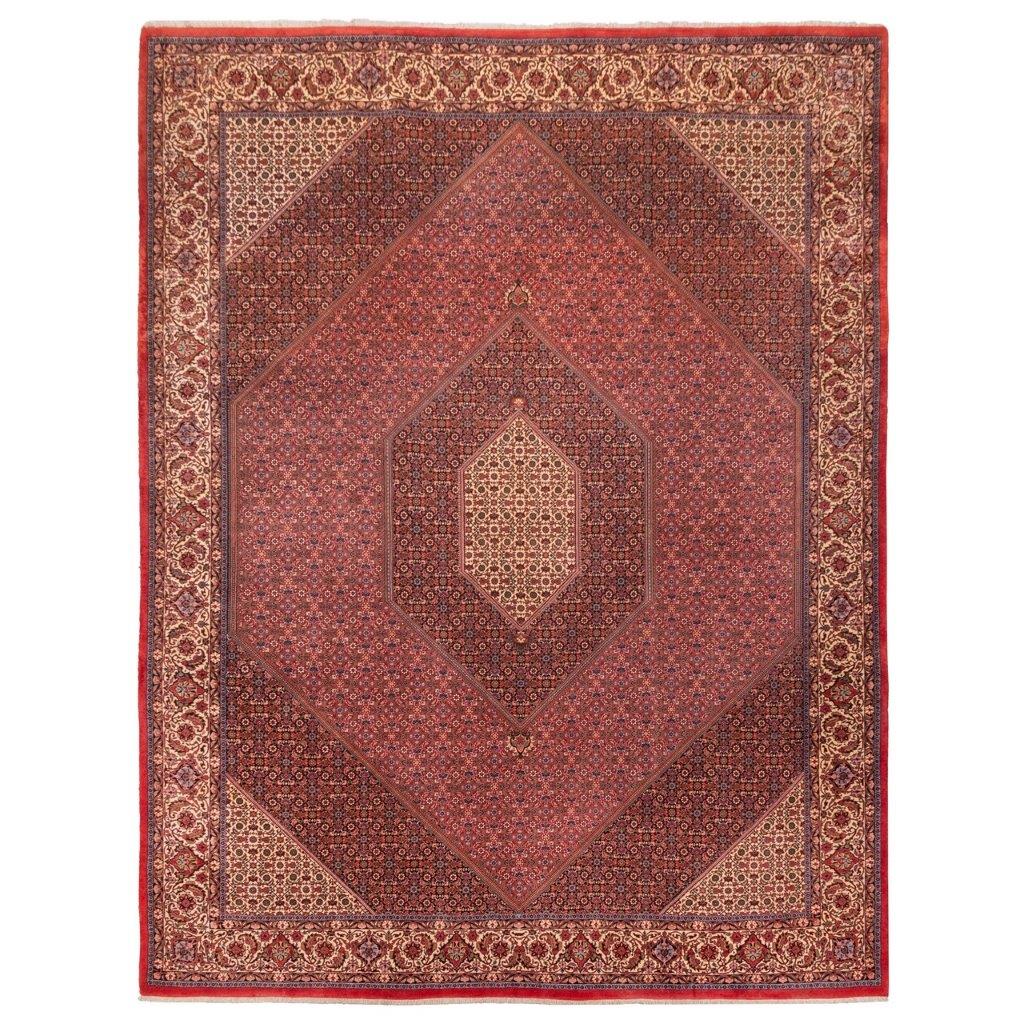
Tabriz, Kashan, Isfahan, and Kerman carpets can complement interiors containing antique furniture, decorative moldings, wood floors, libraries, and formal furnishings. Their detailed compositions can add depth and visual interest to an already carefully decorated room.
For Contemporary French Interiors
French contemporary interiors do not necessarily require a completely modern rug. A traditional Persian carpet can create an intentional contrast with modern furniture, neutral walls, natural wood, stone, and minimalist decoration.
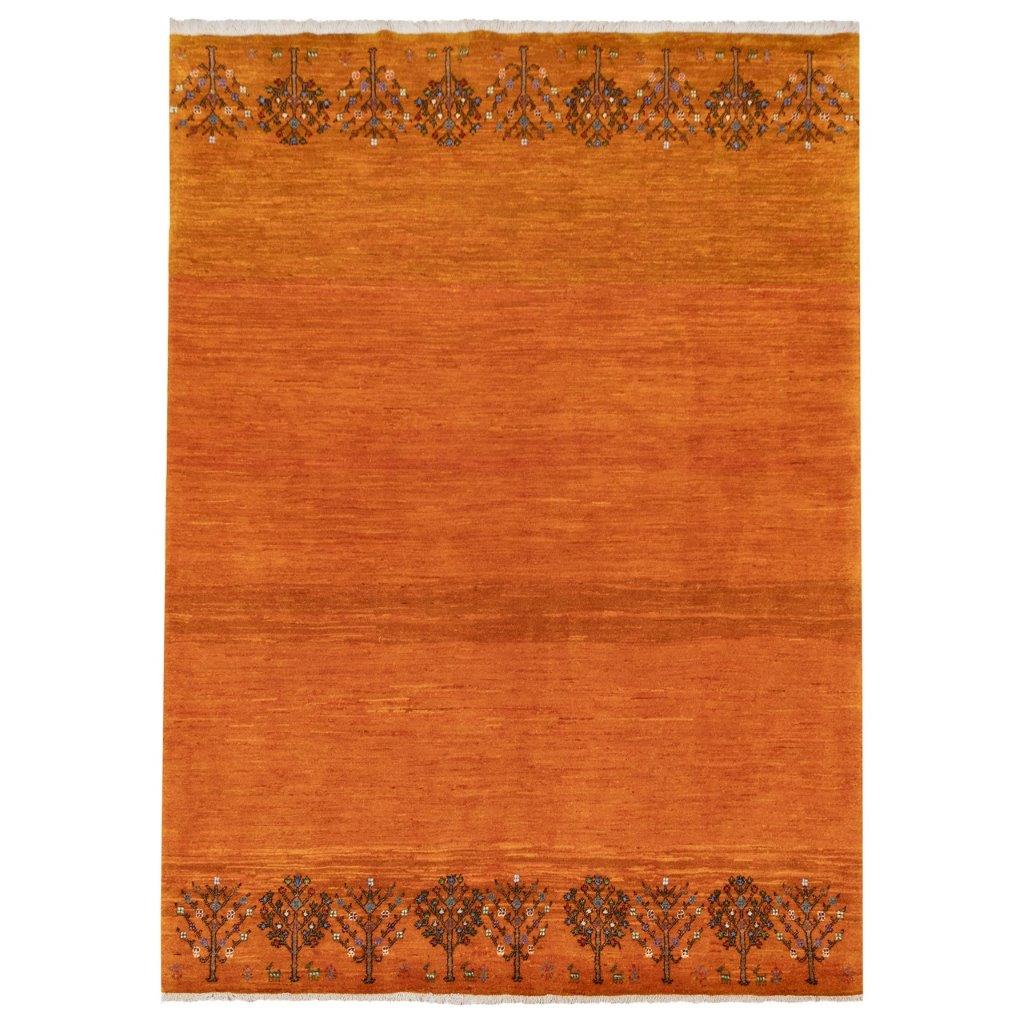
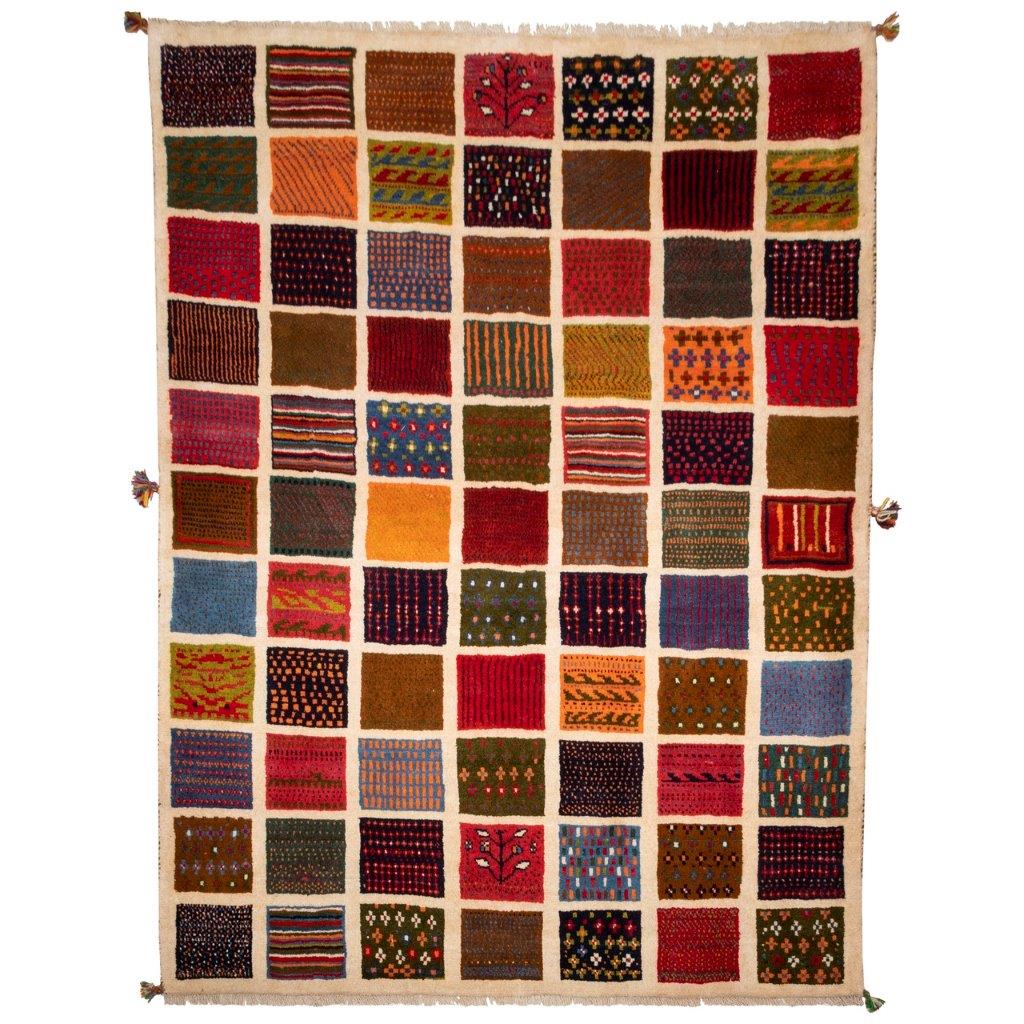
For a more relaxed and contemporary look, Gabbeh Persian rugs are a strong option. Their simpler geometric designs and thicker wool pile can work well with modern furniture and understated interiors.
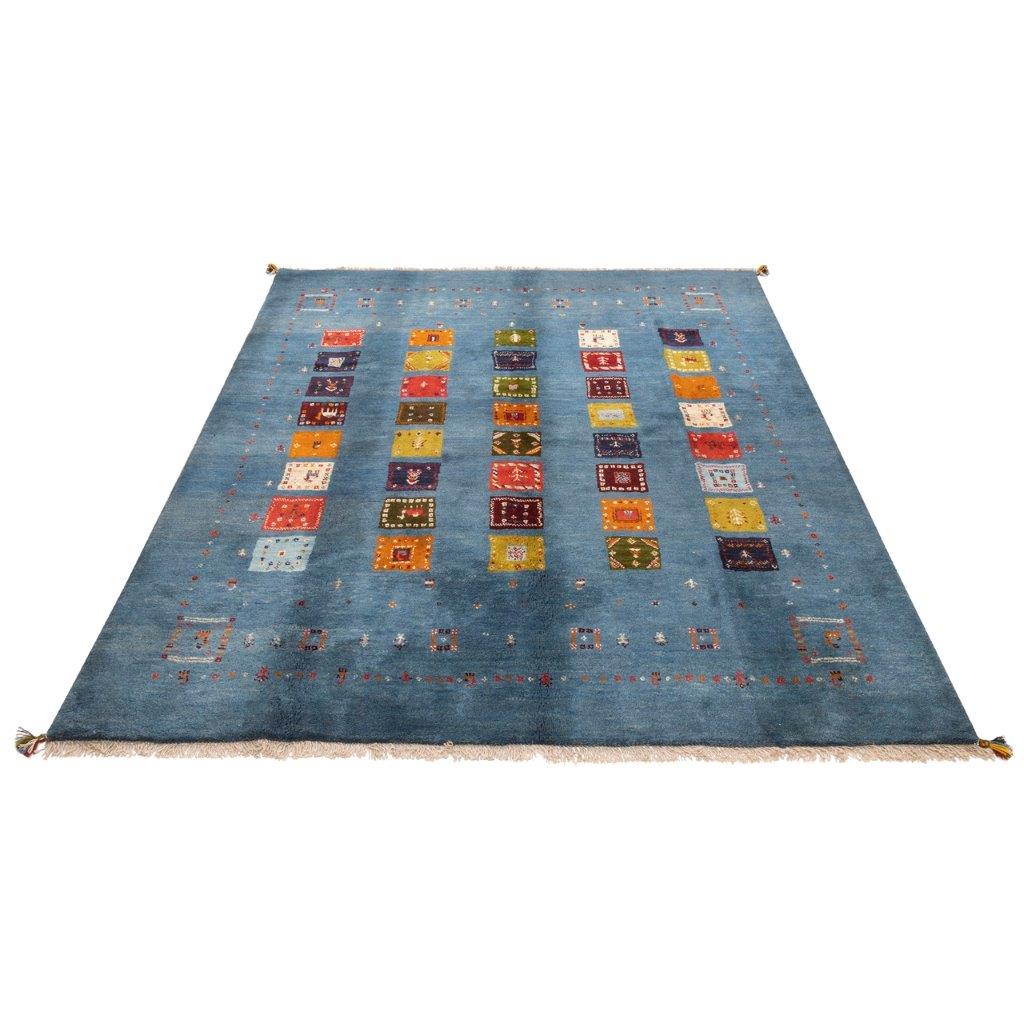
French buyers looking for a lighter and more informal textile can also consider Persian Kilim rugs. Their flat-woven construction, geometric patterns, and lighter visual character make them useful for contemporary spaces where a traditional pile carpet may feel too heavy.

For Eclectic and Collected Interiors
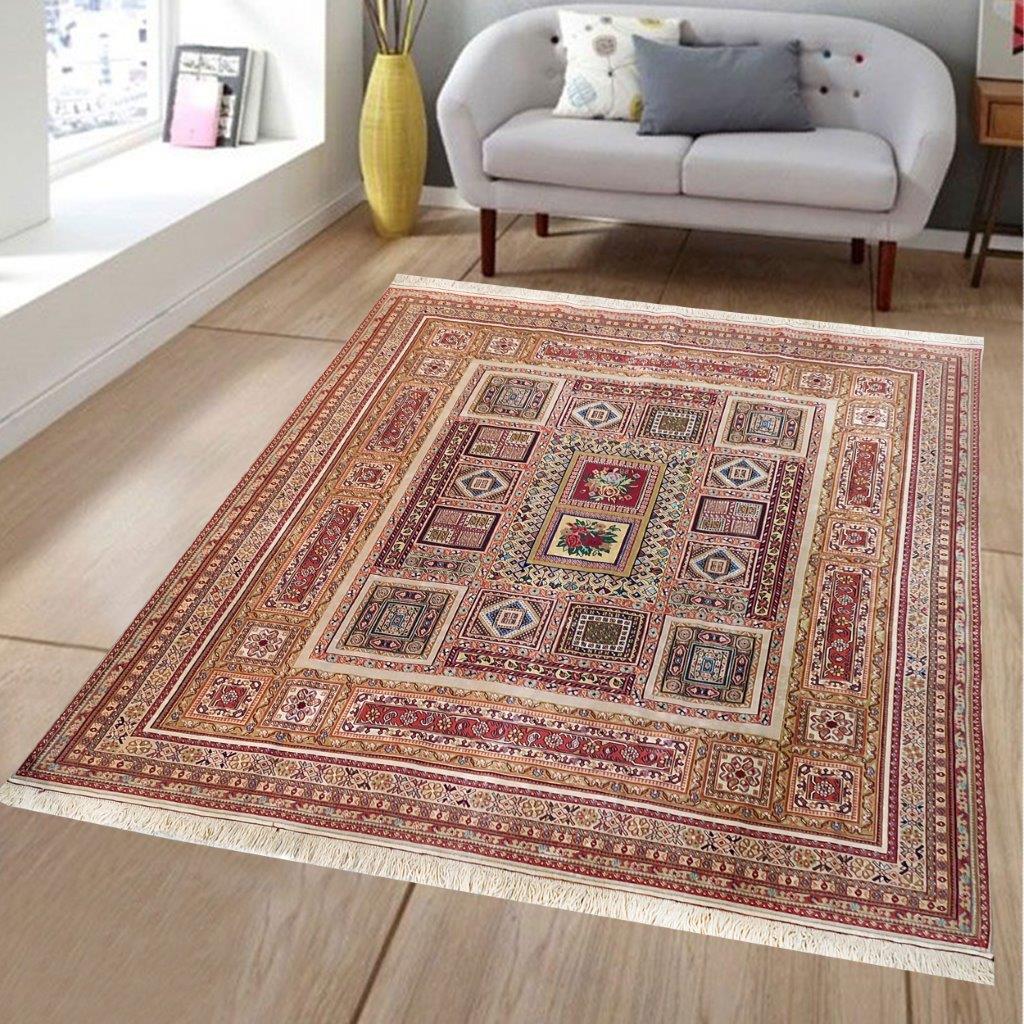
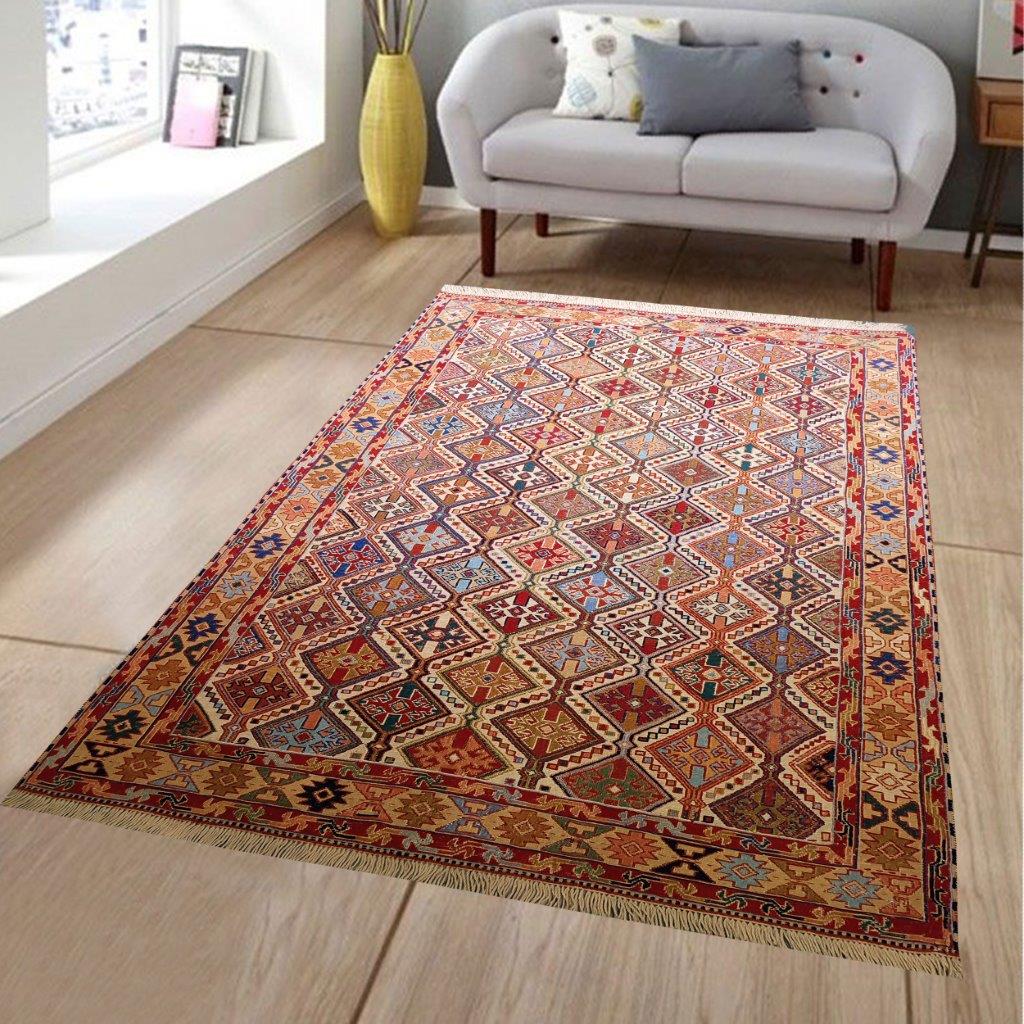
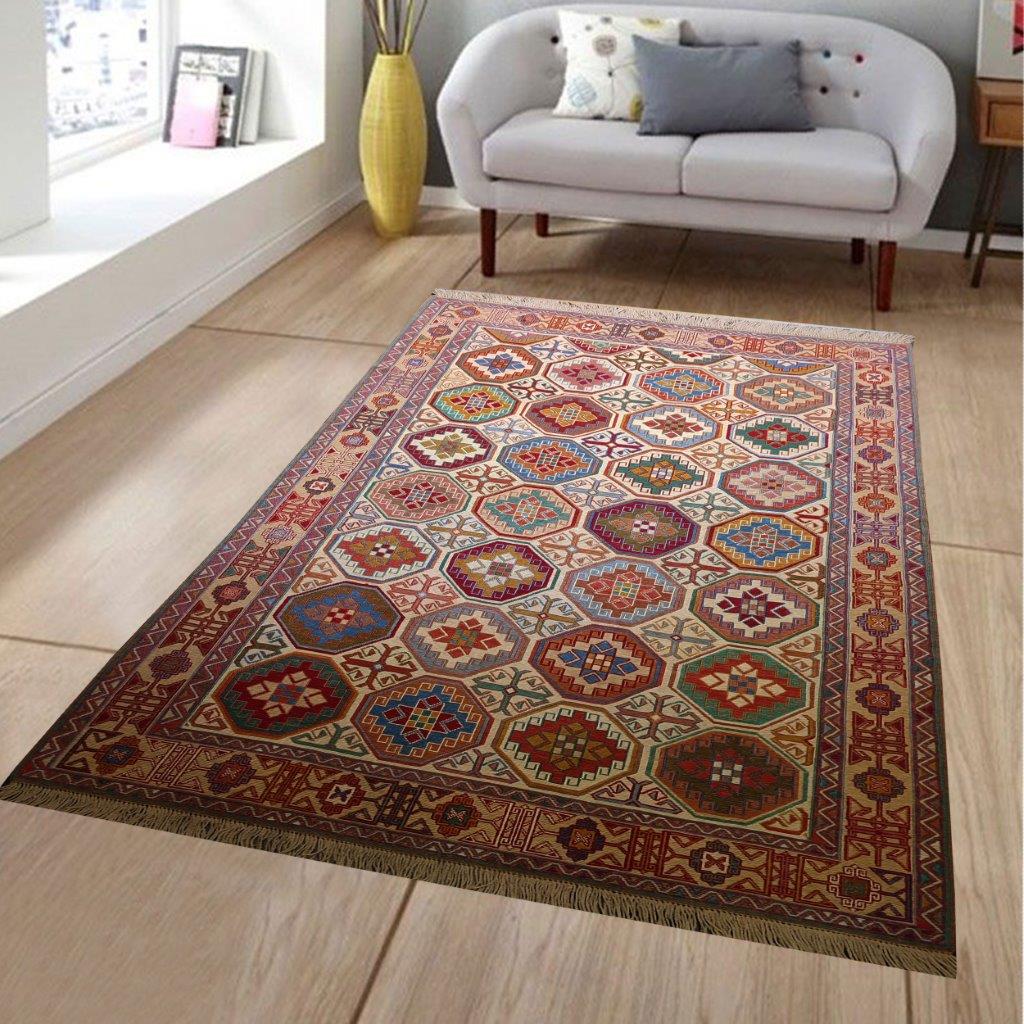
Heriz, Gabbeh, Afshar, and other tribal carpets can introduce stronger geometric forms, natural textures, and individual character. They can work especially well when an interior combines different periods, materials, and decorative styles.
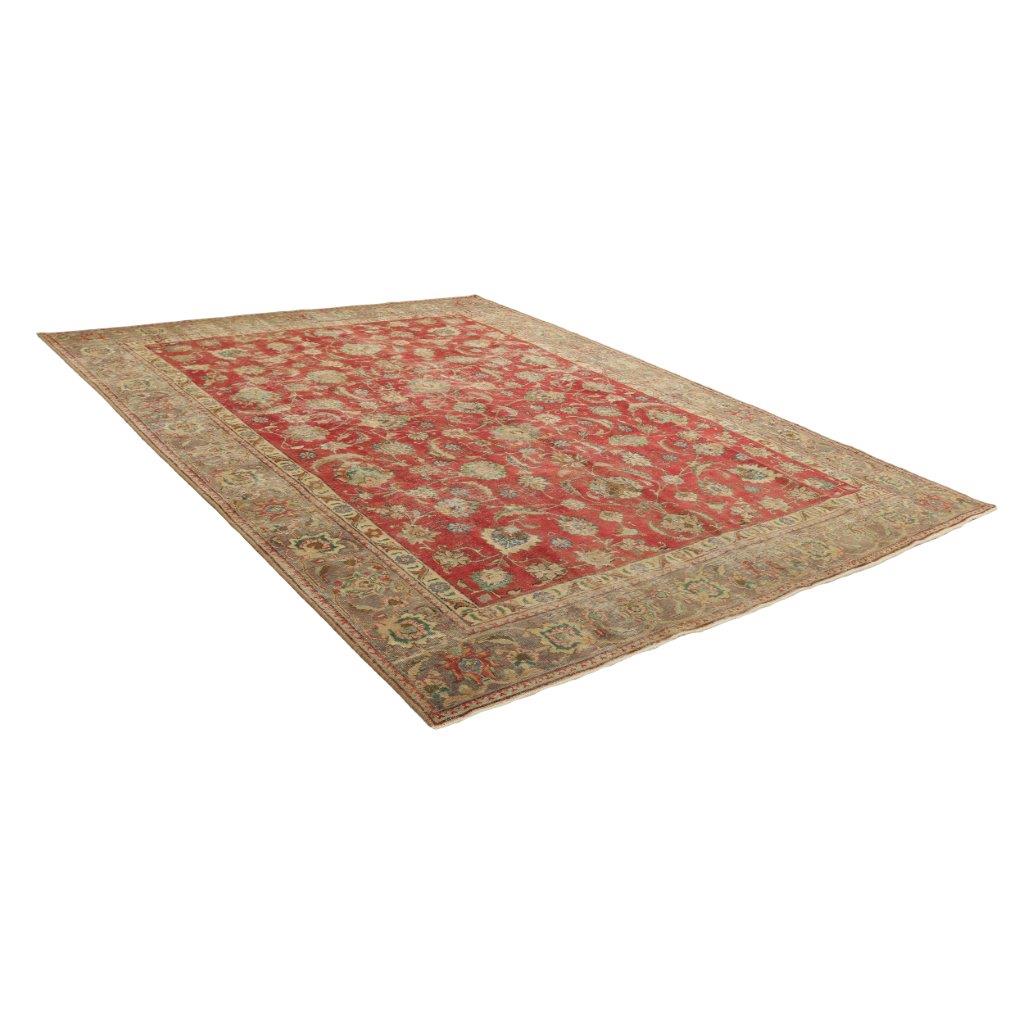
For buyers interested in older pieces and the character that comes with age, vintage Persian rugs offer another direction. Variations in color, wear, and patina can give a room a more individual and collected appearance.
Popular Persian Carpet Styles for French Homes
Tabriz Rugs
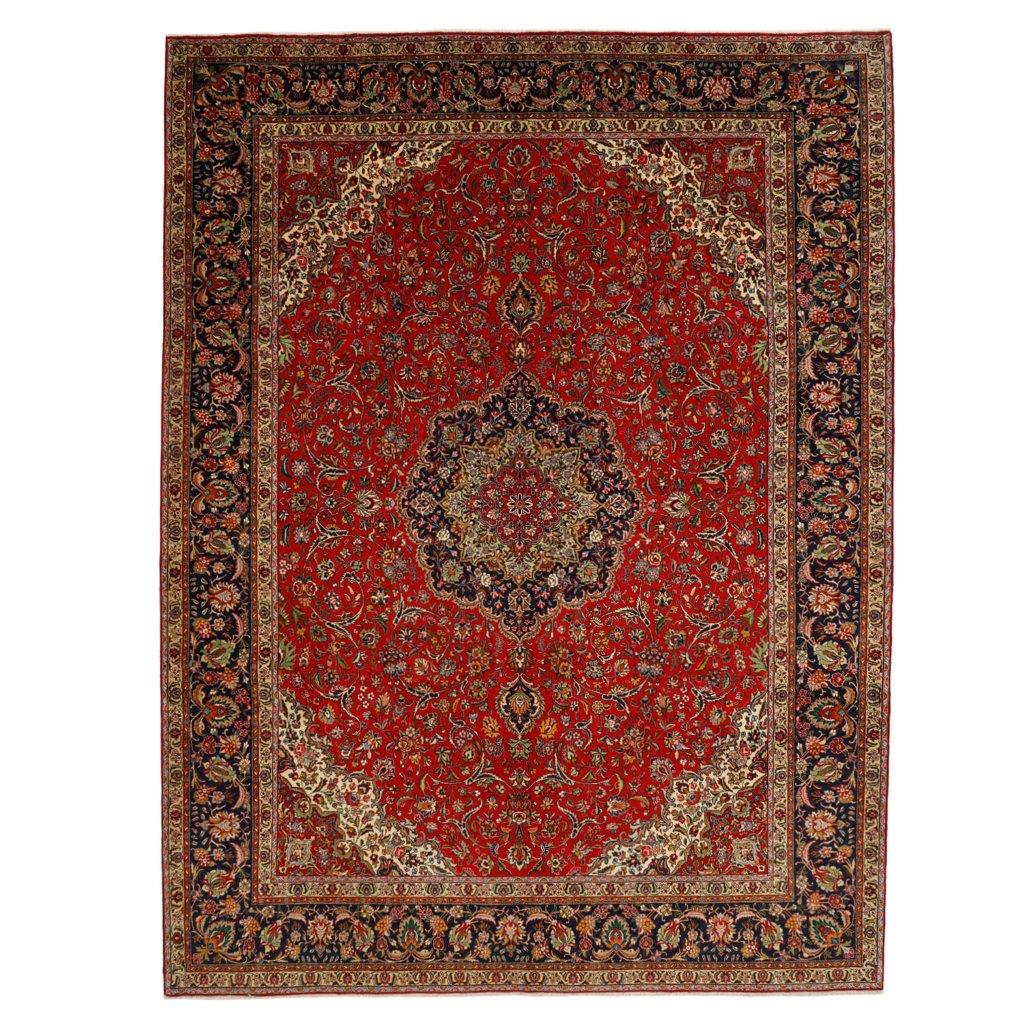
Tabriz carpets are known for detailed craftsmanship, refined floral compositions, medallions, and a broad range of traditional designs. Their versatility makes them suitable for elegant living rooms, dining rooms, libraries, and interiors that combine traditional and contemporary elements.
Isfahan Rugs
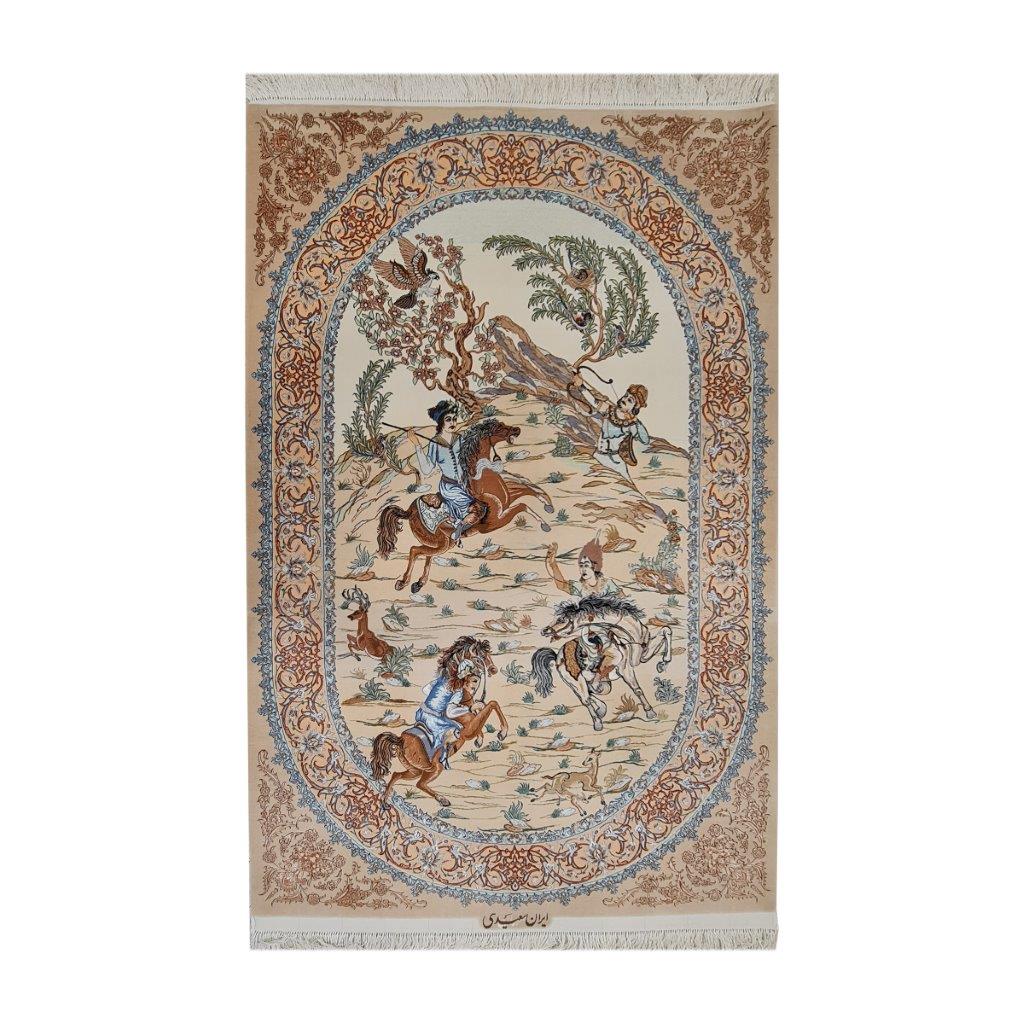
Isfahan carpets are appreciated for refined patterns, precise weaving, balanced compositions, and sophisticated color combinations. Fine examples can become an important decorative element in a carefully designed French interior.
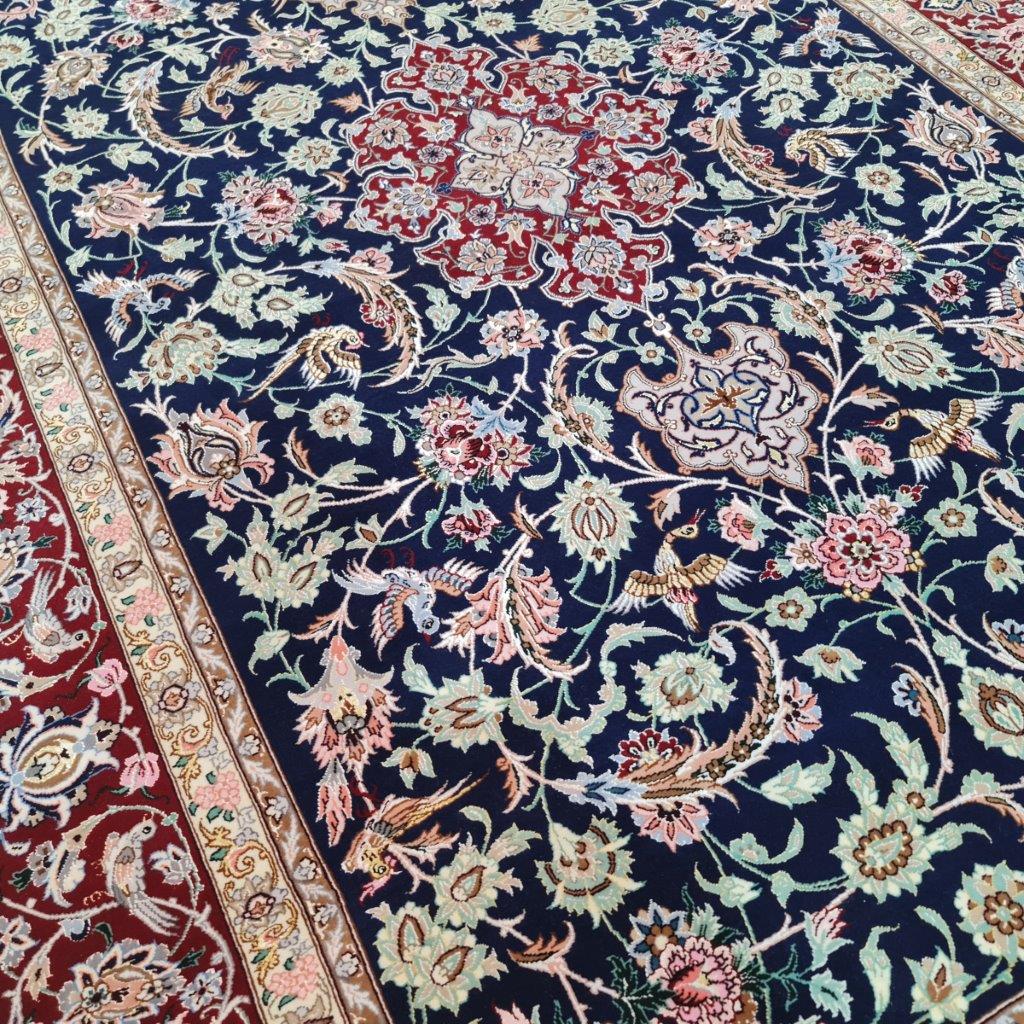
Kashan Rugs
Kashan carpets traditionally feature floral compositions, classical medallions, and rich decorative patterns. They can work particularly well in formal living rooms, dining rooms, libraries, and interiors with traditional furniture.
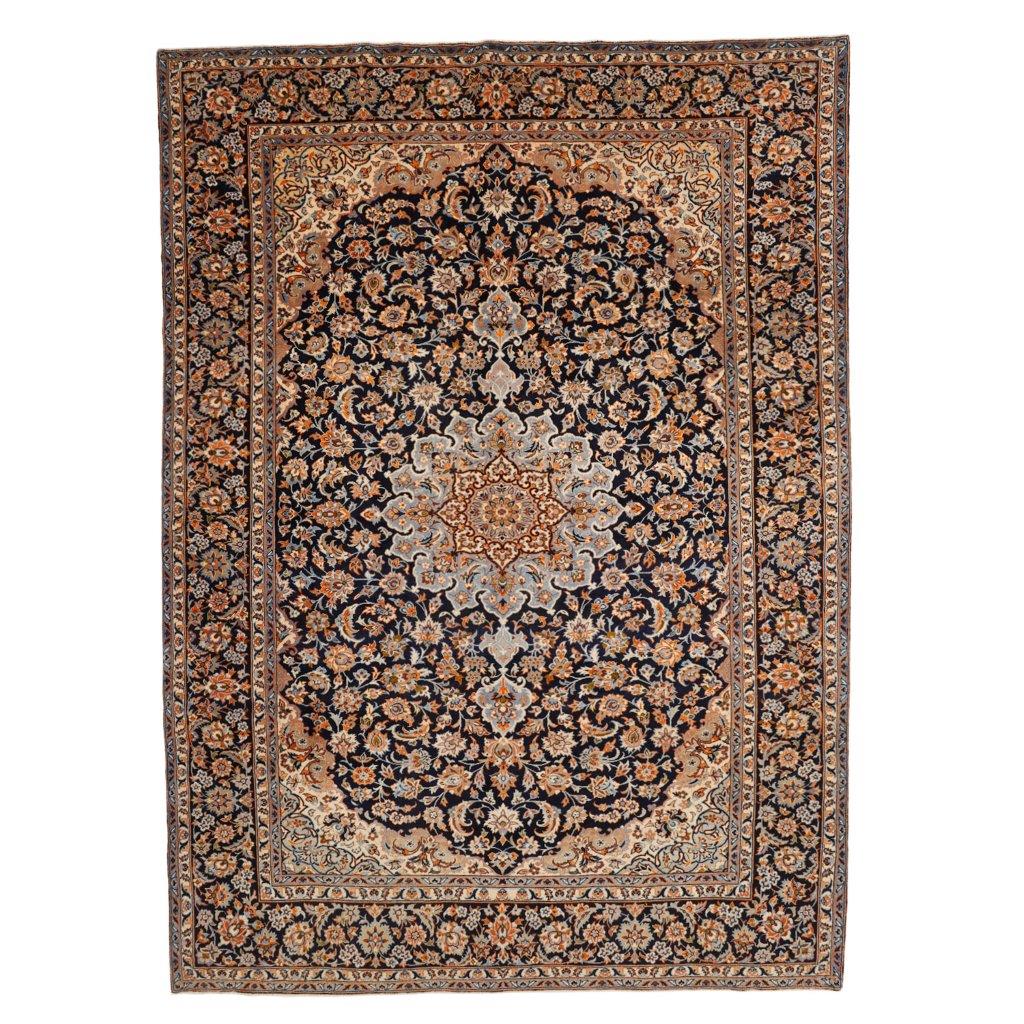
Nain Rugs
Nain carpets are recognized for refined designs, detailed weaving, and often lighter color combinations. They can suit bright interiors and rooms where the carpet should provide elegance without becoming visually dominant.
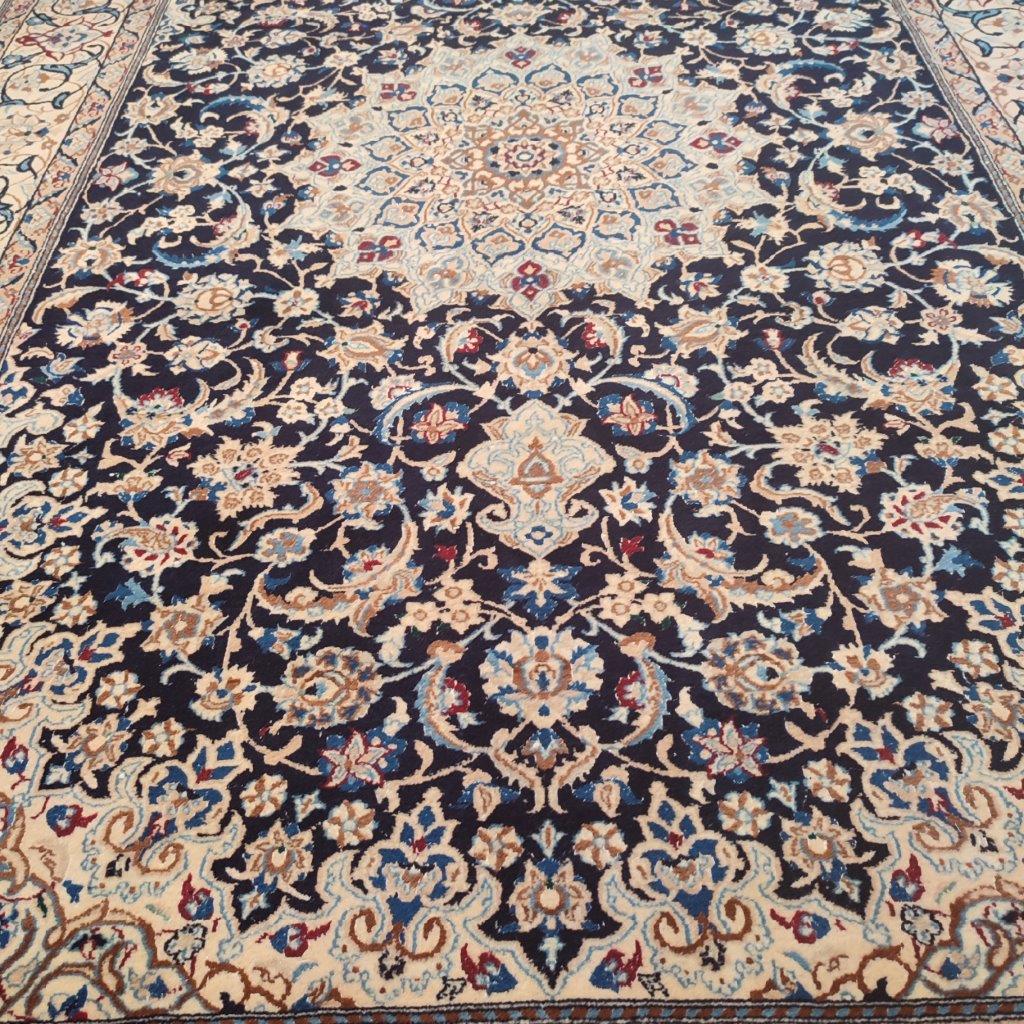
Qom Silk Rugs
Qom is particularly associated with fine silk carpets featuring intricate designs and exceptional detail. These carpets are often chosen for formal interiors, collectors, and buyers looking for a more luxurious decorative piece.

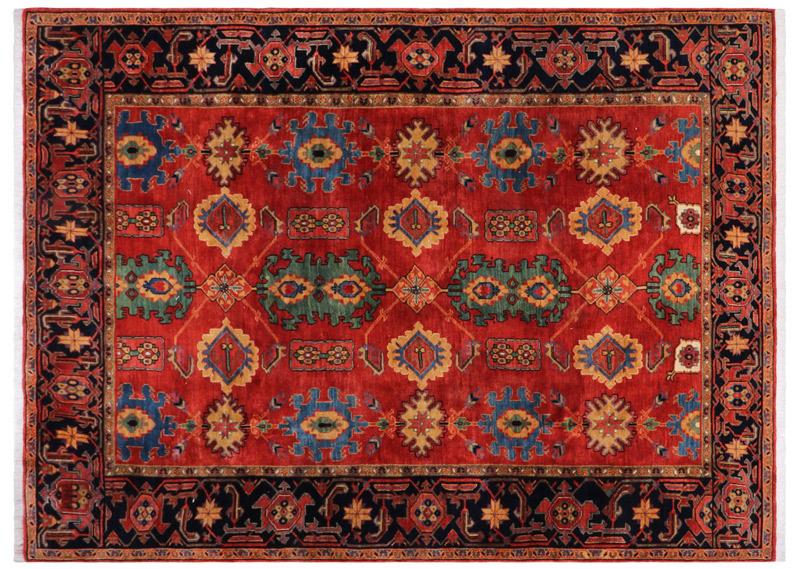
Heriz Rugs
Heriz carpets are distinguished by bold geometric designs, strong medallions, and robust construction. They are particularly suitable for buyers who want a traditional Persian carpet with a stronger visual presence.
Persian Carpets as Decorative Art in France
A Persian carpet can occupy a role similar to other decorative artworks within a French interior. Its composition, palette, scale, and craftsmanship can influence the character of an entire room.
For buyers who collect art, antiques, textiles, or handmade objects, the appeal may extend beyond decoration. The individual design, weaving technique, materials, regional identity, and history of a carpet can make it an object worth studying and preserving.
This is particularly relevant when considering antique Persian carpets. Rather than treating age as the main measure of value, collectors should look at the complete object: rarity, artistic quality, craftsmanship, provenance, materials, condition, and restoration history.

Antique Persian Carpets and Collecting
Antique Persian carpets can occupy a special position among collectible textiles. Exceptional examples may be valued for their artistic quality, rarity, historical significance, and technical craftsmanship as well as their usefulness as interior furnishings.
A carpet described as antique is not automatically valuable. Condition is especially important. Repairs, reweaving, fading, worn areas, alterations, and previous restoration should be understood before purchasing an older piece.
For serious collectors, provenance and documentation can also become important, particularly when purchasing a rare or high-value carpet.

Persian Carpet Prices in France
There is no single fixed price for a Persian carpet. Size, material, weaving quality, region, design, age, condition, rarity, and craftsmanship can all significantly affect the price.
- Gabbeh and tribal rugs: €300 – €1,200
- Fine regional and city rugs: €1,200 – €4,500
- Fine Qom silk rugs: €3,000 – €12,000+
- Antique and collector-grade rugs: €6,000 – €50,000+
These figures are general guidance only. Two carpets of the same size and regional origin can have very different values depending on their quality, condition, materials, design, and history.
Buying a Persian Carpet Directly from Iran
Buying directly from Iran can give French customers access to a much broader selection of authentic handmade carpets than choosing only from locally available stock. Buyers can compare different weaving regions, sizes, materials, colors, designs, and levels of craftsmanship.
We help make this process easier by giving French customers access to carpets from different Persian weaving regions and providing information about the actual piece before purchase. Detailed photographs, dimensions, materials, place of weaving, and condition can be reviewed before an order is confirmed.
For an international purchase, it is important to confirm the complete delivered cost, shipping arrangements, applicable import requirements, taxes or duties, payment conditions, and any documentation supplied with the carpet.
View Available Persian Carpets
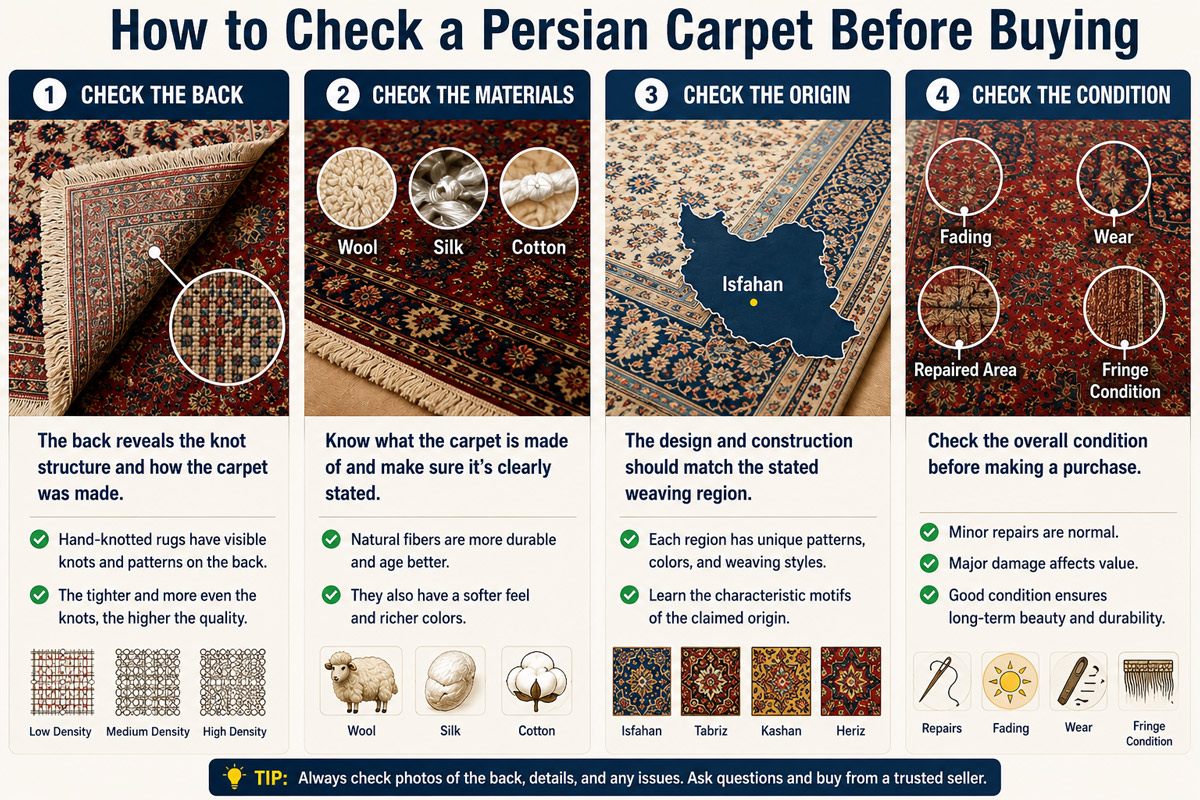
How to Check a Persian Carpet Before Buying
Check the Back
The reverse side can reveal the knot structure and provide useful information about how the carpet was made.
Check the Materials
Ask whether the carpet is woven from wool, silk, cotton, or a combination of materials, and make sure the materials are clearly stated.
Check the Origin
The design and construction should be consistent with the stated weaving region. Regional characteristics can help buyers understand what they are purchasing.
Check the Condition
For older carpets, ask about repairs, restoration, fading, wear, and other condition issues before making a purchase.
Ask for Detailed Photographs
When buying online, photographs of the complete carpet, reverse side, edges, pile, and any areas showing wear can help you evaluate the actual piece before ordering.
Common Mistakes When Buying a Persian Carpet in France
- Choosing a carpet only because its colors match the furniture.
- Buying a size that is too small for the room.
- Judging quality only by knot count.
- Assuming that an old carpet is automatically valuable.
- Ignoring repairs, restoration, fading, or wear.
- Not confirming the actual place of weaving and materials.
- Buying online without seeing detailed photographs of the actual carpet.
Frequently Asked Questions About Persian Carpets in France
Can I buy a Persian carpet directly from Iran and have it delivered to France?
Yes. Persian carpets can be purchased directly from Iran and international delivery can be arranged. Shipping conditions, import requirements, taxes, duties, and other costs should be confirmed before ordering.
Which Persian carpets are popular with French buyers?
Tabriz, Isfahan, Kashan, Nain, Qom, Heriz, and Gabbeh carpets can suit different French interiors. The best choice depends on the room, furniture, preferred style, size, material, and budget.
How much does a Persian carpet cost in France?
Prices vary considerably. Handmade tribal carpets can be relatively accessible, while fine city rugs, silk carpets, large pieces, and antique examples can cost substantially more. Size, materials, craftsmanship, origin, age, condition, and rarity all influence price.
Are Persian carpets suitable for contemporary French interiors?
Yes. Simpler Gabbeh and tribal carpets can add natural texture, while Nain, Isfahan, Tabriz, and other refined designs can create contrast with contemporary furniture and architecture.
How can I tell whether a Persian carpet is genuinely handmade?
Examine the reverse side to see the knot structure and construction. You should also ask about the materials, weaving region, finishing, and condition. Detailed photographs of both sides are particularly useful when buying online.
Should I choose a wool or silk Persian carpet?
Wool is generally practical for regular household use because of its durability and comfortable texture. Silk is finer and more delicate and is often selected for formal, decorative, or collectible carpets.
Are antique Persian carpets a good investment?
Some exceptional antique carpets can become valuable collector pieces, but appreciation is not guaranteed. Rarity, provenance, craftsmanship, artistic quality, materials, condition, age, and market demand all influence value.